


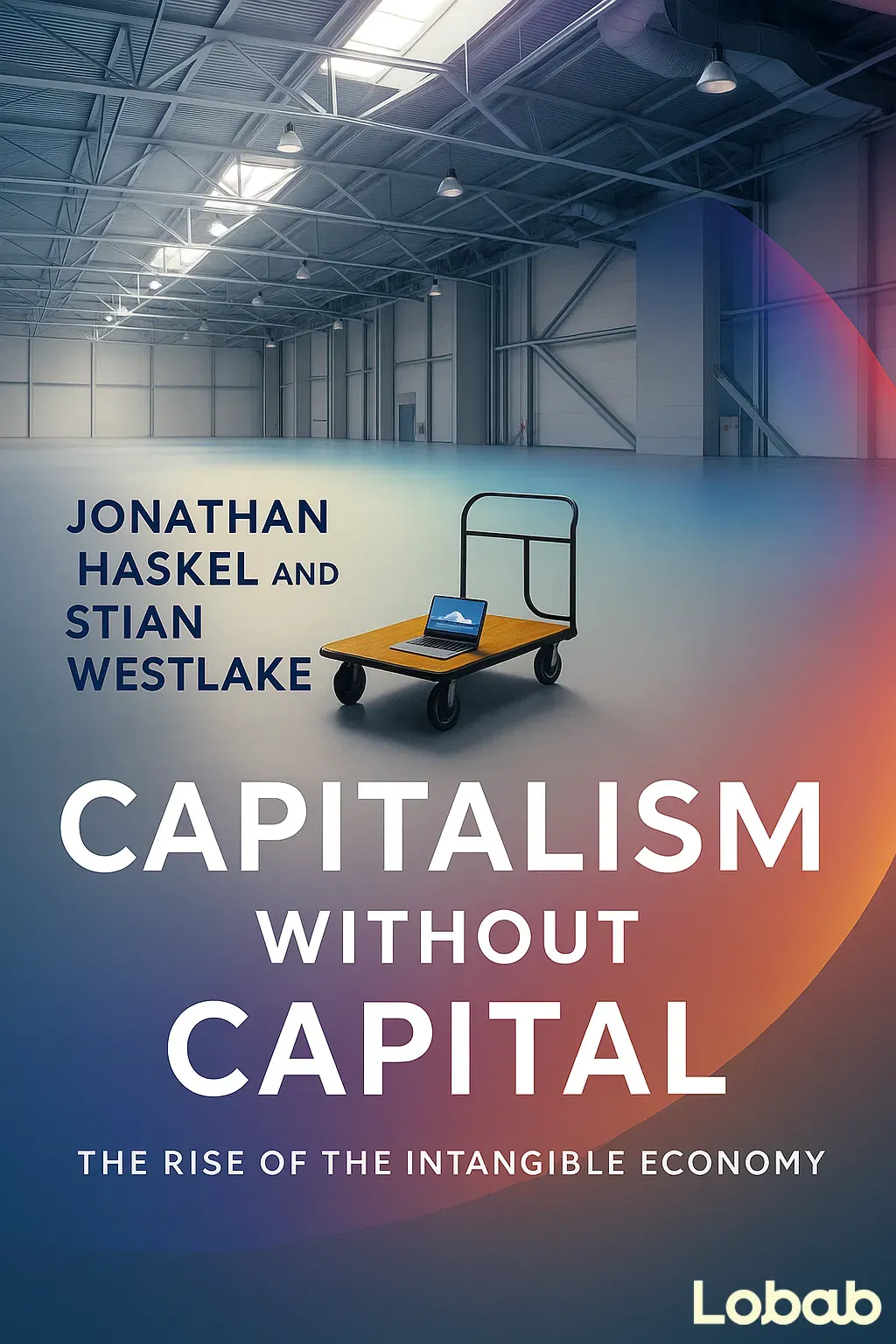
Capitalism without Capital
By Stian Westlake
The Rise of the Intangible Economy. Princeton University Press, 2017.
Summary of Capitalism without Capital book by Stian Westlake
A research-based test on the rise of intangible investments, their effect on global economies, the benefits and drawbacks of intangible societies, and what we can expect from them in the future.
Chapters in Capitalism without Capital book summary
What do you get from this book? Learn how the modern-day economy has evolved from tangible to intangible
Capitalism is when private businesses try to make money; valuation includes both tangible and intangible assets
The economy has shifted from producing physical goods to providing intangible services that include long-term assets
The creation of the “GDP” was a challenge spurred on by the great depression and is still argued today
Scalability, spillover, sunkenness, and synergies are the four components of an intangible society
“Secular stagnation” is the result of several factors that prevent the economy from growing like it should
There are three types of economic inequality that have grown in recent decades: income, wealth, and esteem
Intangible infrastructures are replacing physical ones as the digital age continues pushing economies forward
Investors are reluctant to put money into intangible companies, causing some people to claim our financial systems are outdated
Firms that produce intangible assets face challenges involving investments, competition, and management
Policymakers must create new rules, regulations, and laws to coincide with the new economy
Summary of the key insights
Selected critiques in brief
Final Word
Unlock all 14 chapters of Capitalism without Capital — Get full access to this book summary and thousands more on Lobab.
Capitalism without Capital — Book Summary Snapshot
Who should read Capitalism without Capital book
- Entrepreneurs
- anyone who owns a business
About the author of Capitalism without Capital
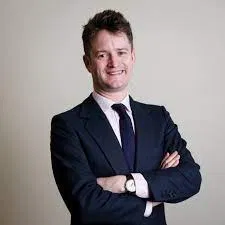
Stian Westlake
British economist Jonathan Haskel teaches at the Imperial College Business School while serving on the Bank of England’s Monetary Policy Committee. Stian Westlake earned his master’s degree in Finance from the London Business School and joined the National Endowment for Science, Technology and the Arts (NESTA), a charity that promotes innovation, in 2009.
Books similar to Capitalism without Capital
Related books that explore themes found in Capitalism without Capital
Costas Lapavitsas
Crisis in the Eurozone. Verso, 2012.
Alan S. Blinder
The Financial Crisis, the Response, and the Work Ahead. Penguin, 2013.
Steve Case
An Entrepreneur’s Vision of the Future. Simon & Schuster, 2016.
Mark Buchanan
What Physics, Meteorology, and the Natural Sciences Can Teach Us About Economics. Bloomsbury, 2013.
Andrew W. Lo
Financial Evolution at the Speed of Thought. Princeton, 2019.
Ha-Joon Chang
Allen Lane, 2010.
Topics related to Capitalism without Capital book
Explore topics that share themes with Capitalism without Capital across Lobab's library


Categories Capitalism without Capital book belongs to
Discover other book summaries in the same categories as Capitalism without Capital
If you liked Capitalism without Capital, you might also enjoy
Books on different topics that Lobab readers often explore alongside Capitalism without Capital
Raghuram Rajan
How Hidden Fractures Still Threaten the World Economy. Princeton University Press, 2010.
Mark Buchanan
What Physics, Meteorology, and the Natural Sciences Can Teach Us About Economics. Bloomsbury, 2013.
Dambisa Moyo
Why Democracy Is Failing to Deliver Economic Growth – and How to Fix It. Basic Books, 2018.
Ha-Joon Chang
Allen Lane, 2010.
Mark Pendergrast
The History of Coffee and How It Transformed the World. Basic Books, 2019.
Jamie Bartlett
How the Internet Is Killing Democracy (and How We Save It). Penguin Random House, 2018.
Ellen Ruppel Shell
The High Cost of Discount Culture. Penguin Press, 2009.
Cal Newport
Choosing a Focused Life in a Noisy World. Portfolio, 2019.
Rashmi Bansal
The Inspiring Stories of 10 Young Entrepreneurs Who Graduated from College into a Business of Their Own. Westland Ltd., 2015.
Can't decide where to start?
With thousands of book summaries across multiple categories and topics, there's always something new to discover. Browse the full library to find your next great read.
Your library
All-you-can-read
Categories
15 categories
Topics
120+ topics
Today's free book summary
Every day, one book summary is completely free to read. Subscribe to unlock the entire library — or just enjoy today's pick on us.
A Brief History of Everyone Who Ever Lived
Adam Rutherford
The eye-opening and sometimes controversial tale of humanity that interweaves a geneticist’s hard data with stories from history, asking questions we’re still learning the answers to while transforming the way we think about evolution.
Library
All-you-can-read
Formats
Text & audio
Free daily
1 book / day
What Lobab readers are saying
Not sure if Lobab book summaries are for you? Here's what our community thinks.
“Lobab is a standout in the world of book summary apps, offering concise, insightful summaries of a wide range of books. Its user-friendly interface and well-crafted summaries allow users to quickly grasp the essence of complex works, making it an invaluable tool for those looking to learn more in less time. Whether for personal growth or professional development, Lobab is a game changer for anyone wanting to expand their knowledge efficiently. Highly recommended!”
Ramogh
Lobab Reader
“Top quality app with plenty of brilliant summaries!”
Benjamin Roche
Lobab Reader
“I found a really great book app that has made reading even more enjoyable ⭐️📚. It is super easy to use, has a lot of books to choose from, gives personalized recommendations, works well with e-readers, has an active community, and is accessible to everyone. I highly recommend it to all book enthusiasts!”
Nedal Ahmed
Lobab Reader