


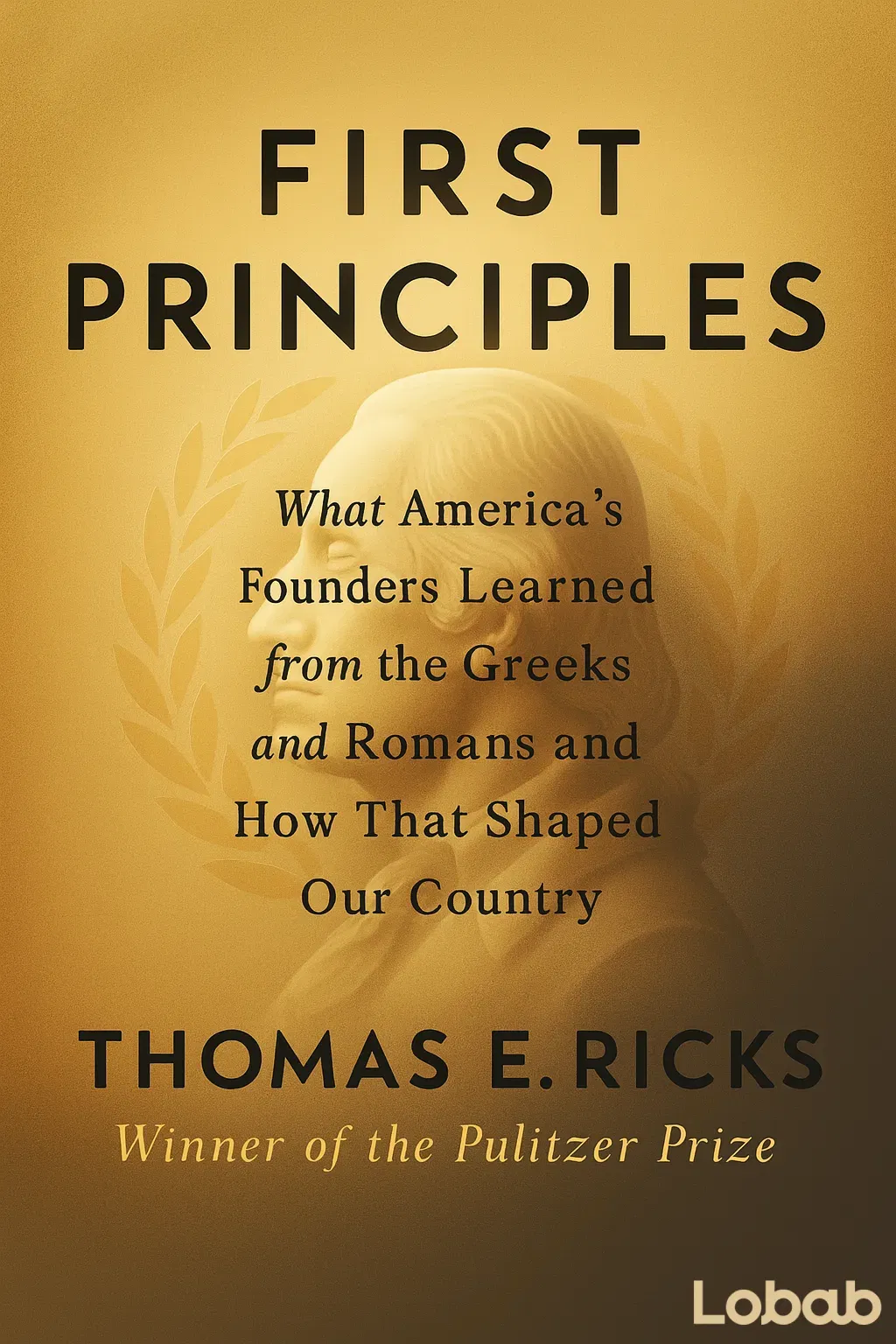
First Principles
By Thomas E. Ricks
What America's Founders Learned from the Greeks and Romans and How That Shaped Our Country. Harper, 2020.
Summary of First Principles book by Thomas E. Ricks
A close examination of four founding fathers – Washington, Adams, Jefferson, and Madison – and the influence that ancient Greek and Roman politics, philosophies, and texts had over them and, consequently, the shaping of America.
Chapters in First Principles book summary
What do you get from this book? Discover how America’s founding fathers created a new nation based on ancient ideas
America’s founding fathers were part of the “revolutionary generation” that was strongly influenced by war and classical ideas
Washington’s fierce leadership and virtue during the French and Indian War embodied everything important about Roman Classicism
John Adams was an educated man who stood out from the founding fathers, modeling himself after Cicero
Thomas Jefferson was born wealthy, went to college, and studied law as well as Greek and Scottish philosophers
James Madison came from an elite family and was strongly influenced by French and Scottish philosophers
The Revolutionary War began in 1765 as the result of increased tension between American colonists and the British
The Declaration of Independence was written by Thomas Jefferson, who used clear language for everyday people and left out religion
Washington was losing the war but adopted a “Fabius strategy,” transforming his battles into victories
Public virtue waned and Washington’s men felt ignored by congress, but the war ended without civil revolt and Washington resigned
The Articles of Confederation were a good first step in uniting the colonies, though classical ideas were facing rejection
The Constitutional Convention began in 1787, but ratification was lengthy, and the new government did not begin until 1789
Washington became the first president and had to contend with changing views and new conspiracies
As the founding fathers aged, Classicism became outdated, though their principles continue on in the Declaration of Independence
Summary of the key insights
Selected critiques in brief
Final word
Unlock all 17 chapters of First Principles — Get full access to this book summary and thousands more on Lobab.
First Principles — Book Summary Snapshot
Who should read First Principles book
- politicians
- anyone with an interest in U.S. history
About the author of First Principles
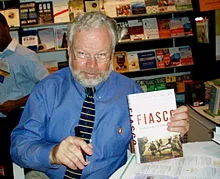
Thomas E. Ricks
Thomas E. Ricks is an American journalist whose columns on military history and national security have appeared in the Wall Street Journal and Washington Post, twice earning him the Pulitzer Prize for National Reporting. His text Fiasco: The American Military Adventure in Iraq was a Pulitzer Prize finalist. Ricks has also served on the Center for New American Security.
Books similar to First Principles
Related books that explore themes found in First Principles
Rebecca Newberger Goldstein
Why Philosophy Won’t Go Away. Pantheon Books, 2014.
Walter Isaacson
An American Life. Simon and Schuster, 2003.
Doris Kearns Goodwin
The Political Genius of Abraham Lincoln. Simon & Schuster, 2005.
Jared Cohen
Eight Men Who Changed America. Simon & Schuster, 2019.
Topics related to First Principles book
Explore topics that share themes with First Principles across Lobab's library


Categories First Principles book belongs to
Discover other book summaries in the same categories as First Principles
If you liked First Principles, you might also enjoy
Books on different topics that Lobab readers often explore alongside First Principles
Greg Grandin
From the Frontier to the Border Wall in the Mind of America. Metropolitan Books, 2019.
Robert Greene
The 48 Laws of Power. Penguin Books, 1998.
Alexis Coe
A Biography of George Washington. Viking, 2020.
Jared Cohen
Eight Men Who Changed America. Simon & Schuster, 2019.
David Grann
The Osage Murders and the Birth of the FBI. Vintage Books, 2017.
Doris Kearns Goodwin
The Political Genius of Abraham Lincoln. Simon & Schuster, 2005.
David Goldblatt
A Global History of the Olympics. W.W. Norton & Company, 2016.
William M. LeoGrande
The Hidden History of Negotiations Between Washington and Havana. The University of North Carolina Press, 2014.
Toby Wilkinson
The Golden Age of Egyptology. W.W. Norton & Company, 2020.
Isabel Allende
On Impatient Love, Long Life, and Good Witches. Ballantine Books, 2021.
Can't decide where to start?
With thousands of book summaries across multiple categories and topics, there's always something new to discover. Browse the full library to find your next great read.
Your library
All-you-can-read
Categories
15 categories
Topics
120+ topics
Today's free book summary
Every day, one book summary is completely free to read. Subscribe to unlock the entire library — or just enjoy today's pick on us.
How to Win Friends and Influence People
Dale Carnegie
A timeless, classic look at how to strengthen your relationships, both professional and personal, with practical tips that will help you can become a well-liked and influential leader by improving your communication skills and making others feel important and valued.
Library
All-you-can-read
Formats
Text & audio
Free daily
1 book / day
What Lobab readers are saying
Not sure if Lobab book summaries are for you? Here's what our community thinks.
“Lobab is a standout in the world of book summary apps, offering concise, insightful summaries of a wide range of books. Its user-friendly interface and well-crafted summaries allow users to quickly grasp the essence of complex works, making it an invaluable tool for those looking to learn more in less time. Whether for personal growth or professional development, Lobab is a game changer for anyone wanting to expand their knowledge efficiently. Highly recommended!”
Ramogh
Lobab Reader
“Top quality app with plenty of brilliant summaries!”
Benjamin Roche
Lobab Reader
“I found a really great book app that has made reading even more enjoyable ⭐️📚. It is super easy to use, has a lot of books to choose from, gives personalized recommendations, works well with e-readers, has an active community, and is accessible to everyone. I highly recommend it to all book enthusiasts!”
Nedal Ahmed
Lobab Reader