


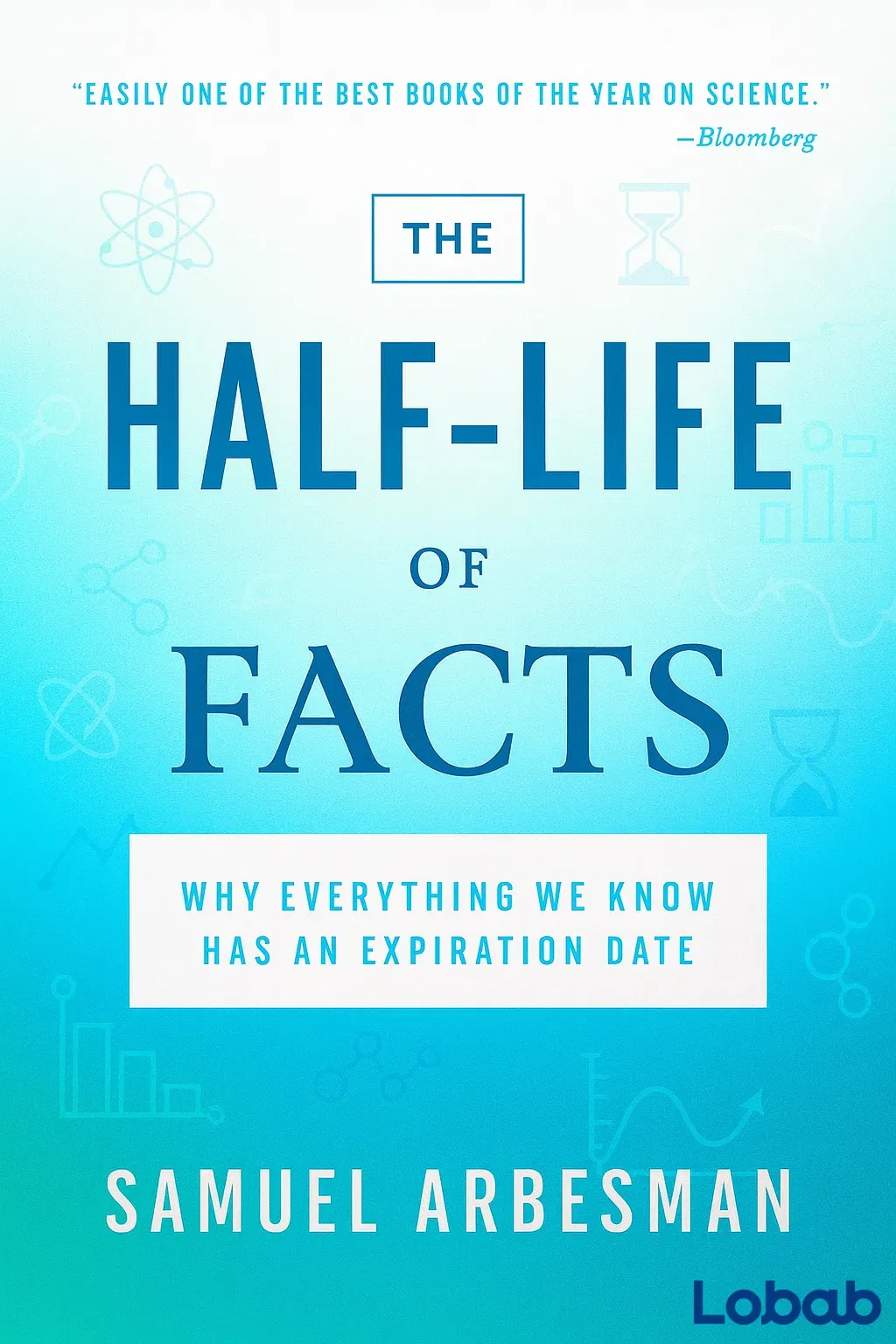
The Half-Life of Facts
By Samuel Arbesman
Why Everything We Know Has an Expiration Date. Current, 2012.
Summary of The Half-Life of Facts book by Samuel Arbesman
An in-depth examination of how and why knowledge fluctuates, the half-life of information, and the effect these changes have over science, culture, and our everyday lives.
Chapters in The Half-Life of Facts book summary
What do you get from this book? The evolution of ever-changing knowledge and how to prepare for it
Facts are constantly changing, but today’s scientists can measure the speed of transformation and help societies stay organized
Change is not always linear, but exponential— scientometrics has developed a system for detecting patterns and measuring these changes
“Lazarus taxa” proves that facts can be overturned, but half-lives are different for every field
“Moore’s Law” demonstrates how quickly technology advances, while “S-curves” show how multiple technologies work together
Social networks have a strong influence on how quickly or slowly information spreads, even when that information is wrong
When multiple disciplines come together, solutions to long-held problems are more likely to be solved
“Phase transitions” demonstrate shifts in knowledge, allowing scientists to predict changes before they occur
Standardized systems for measurement can help scientists collect “precise” data, though it may not always be “accurate”
“Shifting baseline syndrome” is a type of bias that puts our own self-interests before the facts, often to unfortunate consequences
Dramatic shifts in knowledge can impact the world, but humans can adapt if they accept the inevitability of change
Summary of the key insights
Selected critiques in brief
Final word
Unlock all 14 chapters of The Half-Life of Facts — Get full access to this book summary and thousands more on Lobab.
The Half-Life of Facts — Book Summary Snapshot
Who should read The Half-Life of Facts book
Educators • students • scientists • historians • sociologists
About the author of The Half-Life of Facts
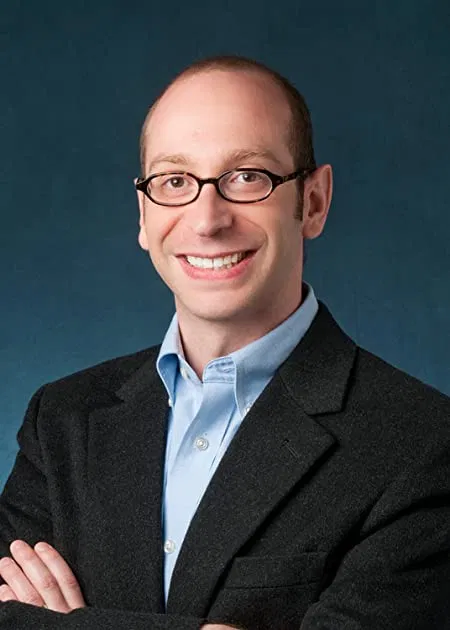
Samuel Arbesman
Samuel Arbesman holds a PhD in computational biology from Cornell University. His work has appeared in the Wall Street Journal, New York Times, and Wired magazine. He is the former Senior Scholar at the Ewing Marion Kauffman Foundation and previous Research Fellow at Harvard University. Currently, Arbesman is Scientist in Residence at Lux Capital, a venture capital firm.
Books similar to The Half-Life of Facts
Related books that explore themes found in The Half-Life of Facts
Will Storr
Why Stories Make Us Human and How to Tell Them Better. Collins, 2019.
Jeffrey A. Lieberman
The Untold Story of Psychiatry. Hachette Book Group, Inc., 2015.
Robert Sapolsky
The Biology of Humans at Our Best and Worst. Penguin Press, 2017.
Carl Sagan
An Extraterrestrial Perspective. Anchor Books, 1973.
Ray Kurzweil
The Secret of Human Thought Revealed. Viking Press, 2012.
Richard Dawkins
How We Know What’s Really True. Free Press, 2011.
Topics related to The Half-Life of Facts book
Explore topics that share themes with The Half-Life of Facts across Lobab's library


Categories The Half-Life of Facts book belongs to
Discover other book summaries in the same categories as The Half-Life of Facts
If you liked The Half-Life of Facts, you might also enjoy
Books on different topics that Lobab readers often explore alongside The Half-Life of Facts
Christina Thompson
The Puzzle of Polynesia. HarperCollins, 2019.
Isabel Allende
On Impatient Love, Long Life, and Good Witches. Ballantine Books, 2021.
Seth Stephens-Davidowitz
Big Data, New Data, and What the Internet Can Tell Us About Who We Really Are. Dey Street Books, 2017.
Nancy C. Andreasen
The Science of Genius. Plume, 2006.
Will Storr
Why Stories Make Us Human and How to Tell Them Better. Collins, 2019.
Douglas Abrams
A Survival Guide for Trying Times. Celadon Books, 2021.
Ainissa Ramirez
How Humans and Matter Transformed One Another. MIT Press, 2020.
Ed Caesar
The Quest to Run the Impossible Marathon. Simon and Schuster, 2015.
Randall Munroe
Serious Scientific Answers to Absurd Hypothetical Questions. Houghton Mifflin Harcourt, 2014.
Toby Wilkinson
The Golden Age of Egyptology. W.W. Norton & Company, 2020.
Can't decide where to start?
With thousands of book summaries across multiple categories and topics, there's always something new to discover. Browse the full library to find your next great read.
Your library
All-you-can-read
Categories
15 categories
Topics
120+ topics
Today's free book summary
Every day, one book summary is completely free to read. Subscribe to unlock the entire library — or just enjoy today's pick on us.
A Brief History of Everyone Who Ever Lived
Adam Rutherford
The eye-opening and sometimes controversial tale of humanity that interweaves a geneticist’s hard data with stories from history, asking questions we’re still learning the answers to while transforming the way we think about evolution.
Library
All-you-can-read
Formats
Text & audio
Free daily
1 book / day
What Lobab readers are saying
Not sure if Lobab book summaries are for you? Here's what our community thinks.
“Lobab is a standout in the world of book summary apps, offering concise, insightful summaries of a wide range of books. Its user-friendly interface and well-crafted summaries allow users to quickly grasp the essence of complex works, making it an invaluable tool for those looking to learn more in less time. Whether for personal growth or professional development, Lobab is a game changer for anyone wanting to expand their knowledge efficiently. Highly recommended!”
Ramogh
Lobab Reader
“Top quality app with plenty of brilliant summaries!”
Benjamin Roche
Lobab Reader
“I found a really great book app that has made reading even more enjoyable ⭐️📚. It is super easy to use, has a lot of books to choose from, gives personalized recommendations, works well with e-readers, has an active community, and is accessible to everyone. I highly recommend it to all book enthusiasts!”
Nedal Ahmed
Lobab Reader